


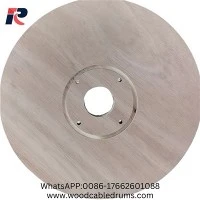


In the realm of cable management and storage, plywood cable spools have emerged as a popular choice for various industries. As a seasoned supplier of plywood cable spools, I often encounter inquiries from customers about the ease of assembling these spools. In this blog post, I will delve into the intricacies of plywood cable spool assembly, exploring the factors that contribute to their ease of use and providing insights based on my experience in the industry.
Understanding Plywood Cable Spools
Plywood cable spools are designed to safely and efficiently store and transport cables of various types and sizes. They are constructed using high - quality plywood, which offers a combination of strength, durability, and cost - effectiveness. Plywood spools come in different configurations, including single - flange and double - flange designs, to accommodate different cable handling needs.
The basic components of a plywood cable spool typically include the hub, the flanges, and the spacers. The hub is the central part around which the cable is wound, while the flanges prevent the cable from slipping off the spool. Spacers, if used, help maintain a proper distance between the flanges and add to the overall stability of the spool.
Factors Affecting Assembly Ease
1. Design and Pre - fabrication
One of the key factors that determine the ease of assembling plywood cable spools is their design. Modern plywood spools are often designed with assembly in mind. Many spools are pre - fabricated with precision - cut components, which means that the parts fit together seamlessly. For example, the holes in the flanges and the hub are pre - drilled to match, reducing the need for on - site drilling and ensuring a proper fit.
Our company takes pride in offering Steel Wire Rope Plywood Drum that are designed with user - friendly assembly in mind. The components are precisely measured and cut, allowing for a straightforward assembly process.
2. Tool Requirements
The tools required for assembling plywood cable spools also play a significant role in ease of assembly. In general, the assembly of plywood spools does not require specialized or expensive tools. Basic hand tools such as screwdrivers, wrenches, and hammers are usually sufficient. This means that even those with limited technical skills can assemble the spools with relative ease.
For more complex spool designs or larger - scale projects, power tools like drills may be used to speed up the process. However, the fact that the assembly can be accomplished with common tools makes it accessible to a wide range of users.
3. Instruction and Support
Clear and comprehensive instructions are essential for easy assembly. As a supplier, we provide detailed assembly manuals with each set of plywood cable spools. These manuals include step - by - step instructions, diagrams, and safety guidelines. In addition, our customer support team is always available to answer any questions that customers may have during the assembly process.
We understand that proper assembly is crucial for the performance and safety of the cable spools. Therefore, we go the extra mile to ensure that our customers have all the information they need to assemble the spools correctly.
The Assembly Process
The assembly process of plywood cable spools can be broken down into several steps:
Step 1: Preparation
Before starting the assembly, it is important to gather all the necessary components and tools. Lay out the components in an organized manner to ensure easy access during the assembly process. Check the components for any damage or defects and ensure that all the required parts are present.
Step 2: Attaching the Flanges to the Hub
The next step is to attach the flanges to the hub. This is typically done using bolts or screws. Align the holes in the flanges with the holes in the hub and insert the fasteners. Tighten the fasteners evenly to ensure a secure fit. Make sure that the flanges are perpendicular to the hub to prevent any wobbling or instability.
Step 3: Adding Spacers (if applicable)
If the spool design includes spacers, they should be added at this stage. The spacers are usually placed between the flanges to maintain a consistent distance. Secure the spacers in place using the appropriate fasteners.
Step 4: Final Checks
Once the spool is assembled, perform a final check to ensure that all the components are securely attached and that the spool is stable. Check the alignment of the flanges and the hub, and make sure that the spool rotates smoothly.
Advantages of Easy - to - Assemble Plywood Cable Spools
1. Time - Saving
The ease of assembly means that less time is spent on putting the spools together. This is particularly beneficial for industries where time is of the essence, such as construction and telecommunications. Faster assembly allows for quicker deployment of cables, reducing project downtime.


2. Cost - Effective
Since the assembly does not require specialized labor or expensive tools, it helps to keep the overall costs down. Customers can save on labor costs and avoid the need to invest in additional equipment for assembly.
3. Flexibility
Easy - to - assemble spools offer greater flexibility. They can be assembled on - site, which is convenient for projects where the spools need to be transported to different locations. This also allows for easy customization and modification of the spools to meet specific project requirements.
Specialized Plywood Cable Spools
In addition to our standard plywood cable spools, we also offer specialized products such as High Temperature Wire Use Plywood Cable Drums and Stainless Steel Rope Plywood Cable Drum. These specialized spools are designed to meet the unique requirements of specific applications.
Despite their specialized nature, they are still designed with ease of assembly in mind. The same principles of pre - fabrication, clear instructions, and simple tool requirements apply to these spools as well.
Conclusion
In conclusion, plywood cable spools are indeed easy to assemble. Their design, pre - fabricated components, minimal tool requirements, and comprehensive instructions make the assembly process accessible to a wide range of users. Whether you are a small business owner looking to store cables for your operations or a large - scale contractor working on a major infrastructure project, our plywood cable spools offer a convenient and cost - effective solution.
If you are interested in purchasing plywood cable spools for your needs, we invite you to contact us for a detailed discussion. Our team of experts will be happy to assist you in selecting the right spools and providing any necessary support during the purchase process.
References
- "Cable Management Handbook" - A comprehensive guide on cable storage and handling, which provides valuable insights into the design and use of cable spools.
- Industry reports on the use of plywood in packaging and storage solutions, which highlight the benefits of plywood cable spools.