




Are there any differences in welding wire spools for MIG and TIG welding?
As a supplier of welding wire spools, I often encounter customers who are confused about the differences between spools used for MIG (Metal Inert Gas) and TIG (Tungsten Inert Gas) welding. In this blog post, I'll delve into the key disparities and help you understand which spools are best suited for each welding process.
Understanding MIG and TIG Welding
Before we explore the differences in spools, it's essential to have a basic understanding of MIG and TIG welding. MIG welding is a semi - automatic or automatic process where a continuous solid wire electrode is fed through a welding gun and into the weld pool. It uses a shielding gas to protect the weld from contaminants in the air. MIG welding is known for its high welding speed and is commonly used in industrial fabrication, automotive repair, and general metalworking.
On the other hand, TIG welding is a manual process that uses a non - consumable tungsten electrode to create the weld. A separate filler metal may be added to the weld pool as needed. TIG welding provides precise control over the weld, resulting in high - quality, clean welds. It is often used in applications where aesthetics and weld quality are of utmost importance, such as in the aerospace and art industries.
Physical Characteristics of Welding Wire Spools
Size and Capacity
One of the most noticeable differences between MIG and TIG welding wire spools lies in their size and capacity. MIG welding typically requires a larger volume of wire to maintain a continuous welding process. As a result, MIG wire spools are generally larger and can hold more wire. They can range from small spools that hold a few pounds of wire to large industrial - sized spools that can hold up to 100 pounds or more.
In contrast, TIG welding usually uses smaller amounts of filler metal, as the process is more precise and slower. TIG wire spools are therefore smaller in size and have a lower capacity. They are often designed to hold just a few ounces to a few pounds of wire, depending on the application.
Design and Construction
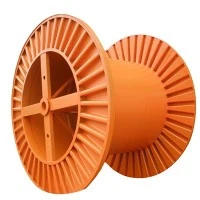
The design and construction of MIG and TIG wire spools also differ. MIG wire spools need to be robust enough to handle the high - speed wire feeding required in the MIG welding process. They are often made of durable materials such as plastic or metal and have a sturdy hub and flanges to prevent the wire from tangling or coming off the spool during feeding.
TIG wire spools, on the other hand, do not require the same level of durability for high - speed wire feeding. However, they need to be designed to protect the relatively thin and delicate TIG filler wire. TIG spools may have a more precise winding pattern to ensure smooth unwinding of the wire, and they are often made of materials that prevent the wire from getting scratched or damaged.
Compatibility with Welding Equipment
Wire Feeding Mechanisms
MIG welding machines are equipped with wire feeding mechanisms that are designed to handle the continuous feeding of wire from the spool. These mechanisms need to be compatible with the size and shape of the MIG wire spool. Some MIG machines are designed to work with specific spool sizes, so it's important to choose a spool that is compatible with your welding equipment.
TIG welding does not typically use a wire feeding mechanism in the same way as MIG welding. Instead, the welder manually adds the filler wire to the weld pool. However, if you are using a TIG welding machine with an optional wire feeder, you need to ensure that the spool is compatible with the feeder mechanism.
Shielding Gas Considerations
In MIG welding, the shielding gas is an integral part of the process. The spool design may need to accommodate the presence of the shielding gas and ensure that it does not interfere with the wire feeding. Some MIG wire spools are designed with special features to allow for proper gas flow around the wire.
In TIG welding, the shielding gas is also used to protect the weld area. However, since the wire is added manually, the spool design does not need to be as closely related to the gas flow as in MIG welding.
Quality and Purity of the Welding Wire
MIG Welding Wire
MIG welding wire is available in a wide range of compositions and qualities. The choice of wire depends on the type of metal being welded and the specific requirements of the application. For example, in carbon steel welding, a common MIG wire is ER70S - 6, which provides good strength and weldability.
The quality of MIG wire is crucial for a smooth and consistent welding process. Contaminants in the wire can cause porosity, spatter, and other welding defects. As a supplier, we ensure that our MIG wire spools are filled with high - quality wire that meets industry standards.
TIG Welding Wire
TIG welding wire requires a higher level of purity compared to MIG wire. Since TIG welding produces high - quality, clean welds, any impurities in the wire can have a more significant impact on the weld quality. TIG wire is often made from high - purity metals and is carefully processed to ensure a smooth surface finish.
For example, when welding aluminum, TIG wire needs to be free of any oxide layers or contaminants to prevent porosity in the weld. Our TIG wire spools are filled with wire that is specifically designed for TIG welding, with strict quality control measures in place to ensure the highest level of purity.
Cost Considerations
MIG Welding Wire Spools
MIG welding wire spools are generally more cost - effective on a per - pound basis compared to TIG wire spools. This is because MIG welding uses larger volumes of wire, and economies of scale come into play. Additionally, the production process for MIG wire is often more streamlined, resulting in lower manufacturing costs.
However, the overall cost of MIG welding also includes the cost of the shielding gas, which can add to the total expense.
TIG Welding Wire Spools
TIG welding wire spools are relatively more expensive per pound due to the higher quality and purity requirements of the wire. The smaller spool sizes also mean that the cost per spool may be higher compared to MIG spools.
However, since TIG welding uses less wire overall, the total cost of wire for a TIG welding project may not be significantly higher than that of a MIG welding project, depending on the application.
Where to Find the Right Welding Wire Spools
As a welding wire spool supplier, we offer a wide range of spools suitable for both MIG and TIG welding. Our Empty Pp Spool is a popular choice for customers who want to refill the spool with their preferred welding wire. It is made of high - quality polypropylene, which provides durability and resistance to damage.


We also have Pp Cable Drum Bobbin options that are designed to meet the specific needs of different welding applications. These bobbins are available in various sizes and capacities, ensuring compatibility with a wide range of welding machines.
For those who need an Empty Wire Spool, we have a selection of spools that are suitable for both MIG and TIG welding. These spools are designed to provide smooth unwinding of the wire and prevent tangling.
Conclusion
In conclusion, there are significant differences between welding wire spools for MIG and TIG welding. These differences include physical characteristics, compatibility with welding equipment, quality and purity of the wire, and cost considerations. As a welding wire spool supplier, we understand the unique requirements of each welding process and offer a wide range of spools to meet the needs of our customers.
If you are in the market for welding wire spools, whether for MIG or TIG welding, we encourage you to contact us for more information. Our team of experts can help you choose the right spools for your specific application and provide you with the best possible solutions. Let's start a conversation and find the perfect welding wire spools for your welding projects.
References
- Welding Handbook, American Welding Society
- Modern Welding Technology, Richard Finch
- AWS D1.1/D1.1M:2020 Structural Welding Code - Steel, American Welding Society