


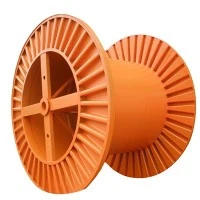


As a supplier of ABS plastic wire reels, I've witnessed firsthand the importance of optimizing their design. In the dynamic world of cable management and storage, the design of these reels can significantly impact functionality, efficiency, and overall user experience. In this blog, I'll share some insights on how to optimize the design of ABS plastic wire reels based on my years of experience in the industry.
Understanding the Basics of ABS Plastic
Before delving into design optimization, it's crucial to understand the properties of ABS plastic. ABS, or acrylonitrile butadiene styrene, is a popular thermoplastic known for its excellent impact resistance, toughness, and rigidity. These properties make it an ideal material for wire reels, as they need to withstand the stresses of winding, unwinding, and transportation.
Consider the Application
The first step in optimizing the design of ABS plastic wire reels is to consider the specific application. Different industries and applications have unique requirements, and the design of the reel should be tailored to meet these needs. For example, in the telecommunications industry, wire reels may need to be designed to hold large amounts of fiber optic cable, while in the electrical industry, they may need to be designed to withstand high temperatures and electrical currents.
Size and Capacity
One of the most important factors to consider when designing ABS plastic wire reels is the size and capacity. The size of the reel will depend on the amount of wire or cable it needs to hold, as well as the available storage space. It's important to strike a balance between size and capacity to ensure that the reel is both functional and efficient.
When determining the capacity of the reel, it's important to consider the diameter and length of the wire or cable, as well as the winding pattern. A well-designed reel will be able to hold the maximum amount of wire or cable without overcrowding or tangling.
Shape and Structure
The shape and structure of the ABS plastic wire reel can also have a significant impact on its performance. A reel with a smooth, rounded shape will be easier to wind and unwind, while a reel with a more complex shape may be more prone to tangling and damage.
In addition to the shape, the structure of the reel is also important. A reel with a strong, sturdy structure will be able to withstand the stresses of winding and unwinding, as well as the weight of the wire or cable. It's important to use high-quality materials and construction techniques to ensure that the reel is durable and long-lasting.
Flanges and Hub Design
The flanges and hub of the ABS plastic wire reel are also important design considerations. The flanges are the circular rims on the sides of the reel that prevent the wire or cable from slipping off, while the hub is the central part of the reel that holds the axle.


The design of the flanges and hub can affect the ease of winding and unwinding, as well as the stability of the reel. A well-designed flange will be wide enough to prevent the wire or cable from slipping off, but not so wide that it makes the reel difficult to handle. The hub should be strong and sturdy, and it should be designed to fit securely on the axle.
Surface Finish
The surface finish of the ABS plastic wire reel can also have an impact on its performance. A smooth, polished surface will be easier to clean and maintain, while a rough or textured surface may be more prone to dirt and debris buildup.
In addition to the smoothness of the surface, the color of the reel can also be important. A bright, visible color can make the reel easier to locate in a storage area, while a neutral color may be more suitable for a professional or industrial setting.
Compatibility with Equipment
Another important factor to consider when designing ABS plastic wire reels is their compatibility with the equipment used to wind and unwind the wire or cable. A well-designed reel will be able to fit securely on the winding and unwinding equipment, and it will be able to rotate smoothly without causing any damage or wear.
It's important to work closely with the equipment manufacturers to ensure that the reel is designed to meet their specifications and requirements. This can help to ensure that the reel is compatible with the equipment and that it will perform optimally in the intended application.
Cost-Effectiveness
Finally, it's important to consider the cost-effectiveness of the ABS plastic wire reel design. While it's important to use high-quality materials and construction techniques, it's also important to keep the cost of the reel in mind.
A well-designed reel should be able to provide the necessary functionality and performance at a reasonable cost. This can be achieved by using efficient manufacturing processes, optimizing the design to reduce material waste, and negotiating favorable pricing with suppliers.
Conclusion
Optimizing the design of ABS plastic wire reels is a complex process that requires careful consideration of a variety of factors. By understanding the properties of ABS plastic, considering the specific application, and paying attention to details such as size, capacity, shape, structure, flanges, hub design, surface finish, compatibility with equipment, and cost-effectiveness, it's possible to design a reel that is both functional and efficient.
If you're in the market for high-quality ABS plastic wire reels, I encourage you to explore our range of products, including ABS Large Plastic Cable Spools, Abs Plastic Spool, and Large Plastic Cable Spool. Our reels are designed and manufactured to the highest standards, and we're committed to providing our customers with the best possible products and services.
If you have any questions or would like to discuss your specific requirements, please don't hesitate to contact us. We look forward to working with you to optimize the design of your ABS plastic wire reels.
References
- Smith, J. (2018). Designing Plastic Products: A Practical Guide. Wiley.
- Jones, R. (2019). Plastics Engineering Handbook. McGraw-Hill.
- Brown, S. (2020). The Science of Plastics. Oxford University Press.