


Hey there! As a supplier of steel cable drums, I often get asked about the maximum rotational acceleration of these drums. It's a pretty interesting topic, and I'm excited to share my thoughts and knowledge with you.
First off, let's talk about what rotational acceleration is. In simple terms, it's how quickly an object can change its rotational speed. For a steel cable drum, this means how fast it can speed up or slow down while spinning. The maximum rotational acceleration of a steel cable drum depends on a few key factors, and we'll break them down one by one.
Factors Affecting Rotational Acceleration
1. Mass and Inertia
The mass of the steel cable drum plays a huge role in determining its rotational acceleration. Inertia is the property of an object that resists changes in its motion, and in the case of a rotating drum, it's called rotational inertia. A heavier drum will have more rotational inertia, which means it'll be harder to speed up or slow down.
Think of it like trying to push a heavy car versus a light bicycle. The car has more mass and inertia, so it takes more force to get it moving or to stop it. Similarly, a steel cable drum with a large mass will require more torque (a rotational force) to achieve a high rotational acceleration.
2. Drum Design
The design of the drum also matters a lot. For example, the distribution of mass within the drum can affect its rotational inertia. A drum with most of its mass concentrated at the outer edge will have a higher rotational inertia compared to one with the mass more evenly distributed.
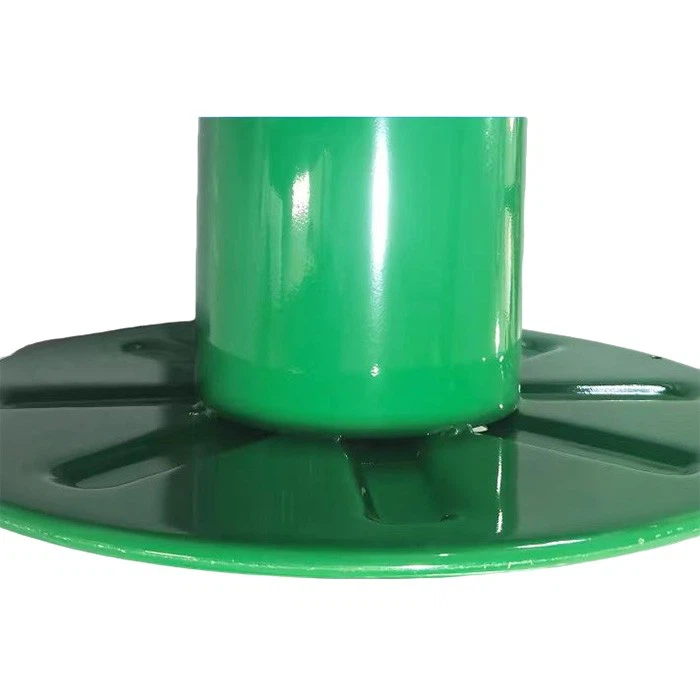
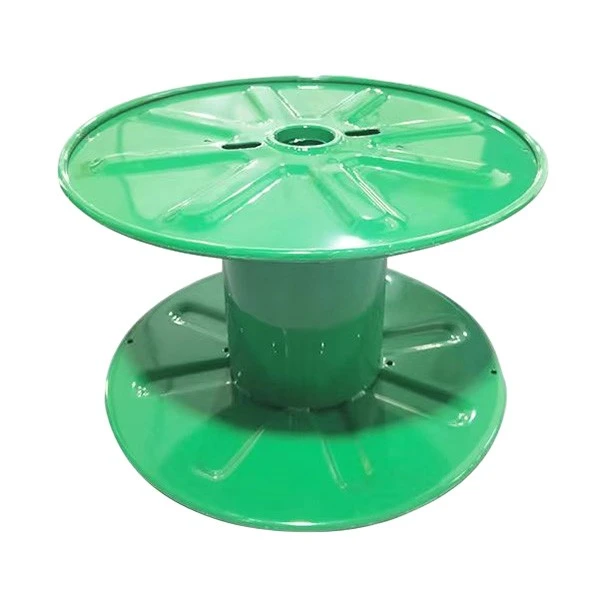
Our Steel Wire Coil Punching Bobbin is designed with efficiency in mind. Its unique structure helps to optimize the distribution of mass, which can potentially lead to better rotational acceleration.
3. Friction
Friction is another important factor. There are two main types of friction to consider: internal friction within the drum's bearings and external friction between the cable and the drum surface. High friction can slow down the drum and reduce its ability to accelerate quickly.
To minimize friction, we use high - quality bearings in our drums. These bearings are designed to reduce the resistance to rotation, allowing the drum to spin more freely. Additionally, the surface of our drums is carefully treated to reduce the friction between the cable and the drum, which can also improve the rotational acceleration.
4. Torque Input
The amount of torque applied to the drum is directly related to its rotational acceleration. According to Newton's second law for rotation, the angular acceleration (a measure of rotational acceleration) is equal to the torque divided by the moment of inertia. So, if you want a high rotational acceleration, you need to apply a large torque.
However, there are limits to how much torque you can apply. The drum needs to be able to withstand the forces generated by the torque without deforming or breaking. Our Double Layer Metal Spool and Double Layer Steel Cable Bobbin are designed to handle high - torque applications, thanks to their robust construction.
Calculating the Maximum Rotational Acceleration
To calculate the maximum rotational acceleration of a steel cable drum, you can use the following formula:
α = τ / I
where α is the angular acceleration (in radians per second squared), τ is the torque applied to the drum (in Newton - meters), and I is the moment of inertia of the drum (in kilogram - square meters).
The moment of inertia depends on the shape and mass distribution of the drum. For a simple cylindrical drum, the moment of inertia can be calculated using the formula:
I = 0.5 * m * r²
where m is the mass of the drum and r is the radius of the drum.
Let's say you have a drum with a mass of 100 kg and a radius of 0.5 meters. The moment of inertia would be:
I = 0.5 * 100 * (0.5)² = 12.5 kg·m²
If you apply a torque of 100 N·m to the drum, the angular acceleration would be:
α = 100 / 12.5 = 8 rad/s²
This is a simplified example, and in real - world applications, you need to consider other factors like friction and the dynamic behavior of the cable.
Real - World Applications
The maximum rotational acceleration of a steel cable drum is crucial in many industries. In the construction industry, for example, cable drums are used to lift and lower heavy loads. A drum with a high rotational acceleration can quickly adjust the length of the cable, allowing for more efficient and precise lifting operations.
In the manufacturing industry, cable drums are used in conveyor systems. A drum that can accelerate and decelerate quickly can improve the overall speed and efficiency of the production line.
Why Choose Our Steel Cable Drums
As a supplier of steel cable drums, we take pride in offering high - quality products. Our drums are designed and manufactured using the latest technology and the best materials. We understand the importance of rotational acceleration in different applications, and we've optimized our drums to achieve the best possible performance.
Our Steel Wire Coil Punching Bobbin, Double Layer Metal Spool, and Double Layer Steel Cable Bobbin are all engineered to provide excellent rotational acceleration. Whether you need a drum for a small - scale project or a large - scale industrial application, we have the right solution for you.
Contact Us for Purchasing
If you're interested in our steel cable drums and want to discuss your specific requirements, don't hesitate to reach out. We're here to help you find the perfect drum for your needs. Whether you have questions about rotational acceleration, drum design, or any other aspect of our products, our team of experts is ready to assist you.
References
- "Engineering Mechanics: Dynamics" by J.L. Meriam and L.G. Kraige
- "Mechanical Design of Machine Elements and Machines: A Failure Prevention Perspective" by Jack A. Collins