


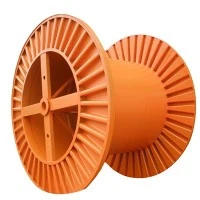


In the field of cable management and storage, steel wood cable reels play a pivotal role. As a dedicated supplier of Steel Wood Cable Reel, I've encountered numerous inquiries regarding the rotational speed limit of these reels. This topic is not only crucial for the safety and efficiency of cable handling operations but also has a significant impact on the longevity of the reels themselves.
Understanding the Basics of Steel Wood Cable Reels
Before delving into the rotational speed limit, it's essential to understand what steel wood cable reels are. These reels are a hybrid design that combines the strength of steel with the natural properties of wood. The steel components, typically the flanges and the hub, provide structural integrity and durability, while the wooden parts, often the spool, offer a smooth surface for cable winding and reduce the risk of cable damage. Steel Wooden Cable Drum and Wooden Steel Cable Drums for Cable are variations of this design, catering to different cable storage and handling requirements.
Factors Affecting the Rotational Speed Limit
Several factors come into play when determining the rotational speed limit of a steel wood cable reel. These factors interact with each other, and understanding their influence is crucial for safe and efficient operation.
1. Material Properties
The materials used in the construction of the cable reel have a significant impact on its rotational speed limit. Steel, known for its high strength and stiffness, can withstand higher rotational forces compared to wood. However, the wood used in the reel also contributes to its overall performance. The type of wood, its moisture content, and its treatment can affect its strength and durability. For example, well - seasoned hardwoods are more likely to handle higher rotational speeds without warping or breaking.
2. Reel Design
The design of the steel wood cable reel, including its diameter, width, and the thickness of its components, plays a vital role in determining the rotational speed limit. A larger diameter reel may require a lower rotational speed to maintain stability, as the centrifugal forces acting on the outer edges are greater. Similarly, a wider reel may need to be rotated more slowly to prevent uneven cable winding and potential damage to the cable.
3. Cable Characteristics
The type, weight, and diameter of the cable being wound on the reel also affect the rotational speed limit. Heavier cables exert more force on the reel during rotation, which can increase the stress on the reel's components. Additionally, cables with a larger diameter may require a slower rotational speed to ensure proper winding and prevent tangling.
4. Bearing Quality
The quality of the bearings used in the reel is another critical factor. High - quality bearings reduce friction and allow the reel to rotate smoothly. Inferior bearings can cause excessive heat generation, increased wear and tear, and may even lead to premature failure of the reel. A reel with well - maintained, high - quality bearings can generally handle higher rotational speeds.
Calculating the Rotational Speed Limit
Determining the exact rotational speed limit of a steel wood cable reel is a complex process that often requires a combination of theoretical calculations and practical testing.
Theoretical Calculations
Engineers can use principles of mechanics and materials science to estimate the maximum rotational speed based on the reel's design and material properties. For example, the centrifugal force acting on the reel can be calculated using the formula (F = m\omega^{2}r), where (F) is the centrifugal force, (m) is the mass of the rotating part, (\omega) is the angular velocity, and (r) is the radius. By comparing this force with the strength of the reel's materials, an approximate rotational speed limit can be determined.


Practical Testing
In addition to theoretical calculations, practical testing is often necessary to validate the rotational speed limit. This involves running the reel at different speeds and monitoring its performance. Parameters such as vibration, noise, and temperature are measured to detect any signs of stress or potential failure. Based on the test results, the rotational speed limit can be adjusted accordingly.
Importance of Adhering to the Rotational Speed Limit
Adhering to the rotational speed limit of a steel wood cable reel is of utmost importance for several reasons.
Safety
Exceeding the rotational speed limit can pose a significant safety risk. The increased centrifugal forces can cause the reel to become unstable, leading to potential accidents such as the reel flying apart or the cable coming loose. This can result in serious injuries to operators and damage to surrounding equipment.
Cable Integrity
Maintaining the proper rotational speed ensures that the cable is wound evenly and without damage. Excessive speed can cause the cable to become tangled, kinked, or even damaged due to the high forces acting on it. This can compromise the performance of the cable and may lead to costly repairs or replacements.
Reel Longevity
Operating the reel within its rotational speed limit helps to extend its lifespan. By reducing the stress on the reel's components, the risk of premature wear and tear is minimized. This means that the reel can be used for a longer period, reducing the overall cost of cable management.
How Our Company Ensures Safe Rotational Speeds
As a supplier of steel wood cable reels, we take several steps to ensure that our products can operate safely within their rotational speed limits.
Quality Materials
We source high - quality steel and wood materials for our reels. The steel is carefully selected for its strength and durability, while the wood is properly seasoned and treated to enhance its performance. This ensures that the reels can withstand the forces associated with rotation.
Precise Design
Our engineering team uses advanced design software to optimize the reel's design. We consider factors such as diameter, width, and component thickness to ensure that the reels are stable and can handle the expected rotational speeds.
Rigorous Testing
Before our reels are released to the market, they undergo rigorous testing. We use a combination of theoretical calculations and practical testing to determine the rotational speed limit. This ensures that our customers receive reels that are safe and reliable.
Contact Us for Your Cable Reel Needs
If you're in the market for high - quality steel wood cable reels, look no further. Our company has a proven track record of providing reliable and durable cable reels. We understand the importance of rotational speed limits and can help you select the right reel for your specific application. Whether you need a Steel Wood Cable Reel, a Steel Wooden Cable Drum, or Wooden Steel Cable Drums for Cable, we have the expertise and products to meet your needs.
Contact us today to discuss your cable reel requirements and to learn more about how we can help you manage your cables safely and efficiently. Our team of experts is ready to assist you in making the right choice for your business.
References
- Budynas, R. G., & Nisbett, J. K. (2011). Shigley's Mechanical Engineering Design. McGraw - Hill.
- Roark, R. J., & Young, W. C. (1989). Formulas for Stress and Strain. McGraw - Hill.
- Timoshenko, S. P., & Goodier, J. N. (1970). Theory of Elasticity. McGraw - Hill.