


In the electrical industry, plastic cable drums play a pivotal role in the storage and transportation of cables. One of the critical properties that often come under scrutiny is their static electricity resistance. As a supplier of plastic cable drums, understanding and communicating this property is essential for our customers' safety and operational efficiency.
Understanding Static Electricity
Static electricity is the result of an imbalance between negative and positive charges in an object. These charges can build up on the surface of materials through processes like friction, induction, or conduction. When two materials come into contact and then separate, electrons can be transferred from one material to the other, leaving one with a positive charge and the other with a negative charge.
In the context of plastic cable drums, the generation of static electricity can be a significant concern. When cables are wound or unwound from the drum, friction between the cable and the drum surface can cause a static charge to accumulate. This static charge can have several detrimental effects, including attracting dust and debris, which can damage the cable insulation over time. More importantly, in certain environments, it can lead to electrostatic discharge (ESD), which may pose a fire or explosion hazard if flammable materials are present.
Static Electricity Resistance of Plastic Cable Drums
The static electricity resistance of plastic cable drums depends on several factors, primarily the type of plastic used in their manufacture. Different plastics have different electrical properties, which can influence their ability to resist the build - up of static charges.
Types of Plastics and Their Resistance
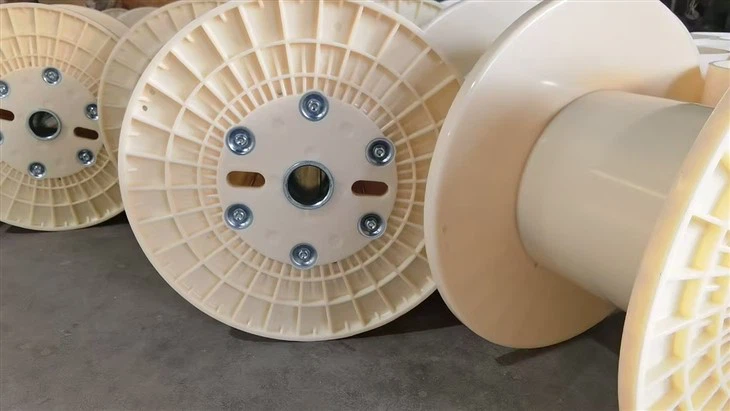
- ABS (Acrylonitrile Butadiene Styrene): ABS is a common plastic used in the production of cable drums. It is a relatively good insulator, which means it can hold a static charge. However, with proper additives, its static electricity resistance can be improved. Some ABS plastic cable drums are treated with anti - static agents during the manufacturing process. These agents work by either increasing the surface conductivity of the plastic, allowing the static charges to dissipate more quickly, or by reducing the friction between the cable and the drum surface, thereby minimizing the generation of static electricity. For example, our Empty ABS Plastic Wire Reel is engineered with advanced anti - static technology to ensure reliable performance.
- HDPE (High - Density Polyethylene): HDPE is another popular choice for cable drums. It has good chemical resistance, durability, and impact strength. HDPE is also a dielectric material, which can accumulate static charges. But like ABS, it can be modified to enhance its static electricity resistance. Conductive fillers can be added to HDPE during compounding to create a path for the dissipation of static charges.
Measuring Static Electricity Resistance
The static electricity resistance of plastic cable drums is typically measured in terms of surface resistance. Surface resistance is the resistance between two electrodes placed on the surface of the material. A lower surface resistance indicates better conductivity and, therefore, better static electricity dissipation. International standards, such as ASTM D257, provide guidelines for measuring the surface resistance of insulating materials.
In real - world applications, manufacturers often conduct in - house tests to ensure that their cable drums meet the required static electricity resistance standards. These tests may involve simulating the winding and unwinding of cables under different conditions to monitor the build - up and dissipation of static charges.
Importance of Static Electricity Resistance in Various Applications
Industrial Environments
In industrial settings, where cables are frequently moved and used in large - scale electrical systems, the static electricity resistance of cable drums is of utmost importance. For example, in a manufacturing plant, a static discharge from a cable drum could potentially disrupt sensitive electronic equipment, leading to production downtime and costly repairs. Moreover, in facilities where there are flammable substances, such as oil refineries or chemical plants, the risk of fire or explosion due to electrostatic discharge is a serious concern. Plastic cable drums with high static electricity resistance can help mitigate these risks.
Telecommunication and Data Centers
In the telecommunication and data center industries, where high - speed data transmission cables are used, static electricity can also cause problems. Static charges on cable drums can attract dust and other contaminants, which can interfere with the performance of the cables. This can lead to signal loss, increase in error rates, and ultimately, affect the reliability of the communication network. Cable drums with good static electricity resistance can help maintain a clean and stable environment for the cables.
Our Approach as a Supplier
As a supplier of plastic cable drums, we are committed to providing products with excellent static electricity resistance. Our R & D team continuously works on improving the formulations of our plastic materials. We invest in advanced manufacturing technologies to ensure that anti - static agents are evenly distributed throughout the drum, providing consistent protection against static build - up.
We also offer customization options for our customers. Depending on their specific application requirements, we can adjust the level of static electricity resistance of our cable drums. For example, for customers in high - risk environments, we can provide drums with ultra - low surface resistance to ensure maximum safety.
How to Choose the Right Cable Drum with Good Static Electricity Resistance
When choosing plastic cable drums with adequate static electricity resistance, customers should consider the following factors:

- Application Environment: Evaluate the environment in which the cable drum will be used. If it is a hazardous environment with flammable substances, a cable drum with high - level static electricity resistance is necessary.
- Certifications: Look for cable drums that meet relevant international standards for static electricity resistance. Certifications can provide assurance that the product has been tested and is compliant with safety requirements.
- Supplier Reputation: Choose a reputable supplier who has a track record of producing high - quality cable drums with reliable static electricity resistance. We have extensive experience in the industry and are known for our commitment to product quality and customer satisfaction.
Contact Us for采购洽谈
If you are in the market for plastic cable drums with excellent static electricity resistance, we are here to help. Our team of experts can provide you with detailed information about our products, including their static electricity resistance properties. We can also assist you in selecting the most suitable cable drums for your specific needs.
Reach out to us today to start the discussion about your cable drum requirements. We are confident that our products will meet your expectations and help you achieve optimal performance in your operations.
References
- ASTM D257 - Standard Test Methods for DC Resistance or Conductance of Insulating Materials
- Handbook of Electrical Insulating Materials, McGraw - Hill Professional