


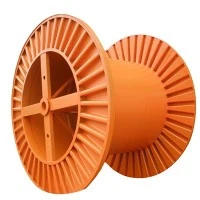


Hey there! As a supplier of ABS plastic spools, I often get asked if these spools can be used for 3D printing. Well, let's dive right into it and find out.
First off, what exactly is ABS plastic? ABS stands for Acrylonitrile Butadiene Styrene. It's a common thermoplastic polymer known for its toughness, impact resistance, and relatively high heat resistance. These properties make it a popular choice in a wide range of applications, from automotive parts to toys.
Now, let's talk about 3D printing. 3D printing, also known as additive manufacturing, is a process of creating three - dimensional objects from a digital model by layering materials on top of each other. Different materials can be used for 3D printing, including plastics like ABS, PLA, PETG, and more.
So, can ABS plastic spools be used for 3D printing? The short answer is yes. ABS plastic has several characteristics that make it suitable for 3D printing.
One of the key advantages of using ABS in 3D printing is its strength. The printed objects made from ABS are quite durable and can withstand a fair amount of stress and impact. This makes ABS a great choice for creating functional parts, like mechanical components or parts that need to endure wear and tear.


Another benefit is its heat resistance. ABS can handle higher temperatures compared to some other 3D printing plastics, such as PLA. This means that ABS - printed parts can be used in applications where they might be exposed to moderate heat, without deforming easily.
However, using ABS plastic spools for 3D printing also comes with some challenges. One of the main issues is warping. ABS has a tendency to shrink as it cools during the 3D printing process. This can cause the edges of the printed object to curl up or warp, especially if the printing environment is not properly controlled. To combat this, a heated build plate is often required to keep the base of the print warm and reduce the temperature difference between the layers, which helps minimize warping.
Another challenge is the odor. When ABS is melted during 3D printing, it emits a strong, somewhat unpleasant odor. This can be a problem, especially if you're printing in an enclosed space. Adequate ventilation is crucial when printing with ABS to ensure a healthy working environment.
If you're considering using ABS plastic spools for your 3D printing projects, it's important to choose high - quality spools. Our company offers a variety of ABS plastic spools that are specifically designed to meet the needs of 3D printing. For example, our PN1000 ABS Bobbin is made with top - grade ABS material, ensuring consistent filament diameter and quality. This consistency is essential for smooth and reliable 3D printing.
Our Abs Plastic Bobbin is another great option. It's engineered to provide excellent flow properties during the printing process, which helps in achieving detailed and accurate prints.
And if you're looking for ABS plastic spools for specific applications, like welding wire spools, we have the ABS Plastic Spools for Welding Wire. These spools are designed to meet the unique requirements of the welding industry and can also be used in 3D printing if you need a specialized type of ABS filament.
When using ABS plastic spools for 3D printing, you also need to pay attention to the printing settings. The extrusion temperature for ABS is typically higher than that of other plastics, usually around 230 - 260 degrees Celsius. The print speed should also be adjusted according to the printer and the complexity of the model. A slower print speed might be necessary for more detailed prints to ensure proper layer adhesion.
In addition to the technical aspects, it's also important to consider the post - processing of ABS - printed objects. ABS can be sanded, painted, and glued easily, which allows for a high degree of customization. You can give your 3D - printed ABS parts a professional look by sanding down the rough edges and then applying a coat of paint.
Overall, ABS plastic spools can be a great choice for 3D printing, but they do require some extra attention and proper setup. If you're new to 3D printing with ABS, it might be a good idea to start with some simple test prints to get a feel for the material and how it behaves in your printer.
If you're interested in purchasing our ABS plastic spools for your 3D printing needs, we'd love to have a chat with you. We can provide you with more information about our products, help you choose the right spool for your project, and discuss any specific requirements you might have. Whether you're a hobbyist looking to create some cool 3D - printed models or a professional in need of high - quality ABS filaments for industrial applications, we've got you covered.
So, don't hesitate to reach out and start a conversation about your 3D printing and ABS plastic spool needs. We're here to make your 3D printing experience as smooth and successful as possible.
References
- Gibson, I., Rosen, D. W., & Stucker, B. (2010). Additive Manufacturing Technologies: Rapid Prototyping to Direct Digital Manufacturing. Springer.
- ASTM International. (2015). Standard Specification for Acrylonitrile - Butadiene - Styrene (ABS) Plastic Pipe and Fittings. ASTM D2681 - 15.