


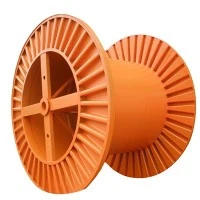


Alright folks, today I'm gonna chat about something super important in the world of plastic products - the flexibility of an ABS plastic spool. As a supplier of these spools, I've seen firsthand how crucial this flexibility is, and I'm stoked to share all the deets with you.
First off, let's break down what ABS plastic is. ABS stands for Acrylonitrile Butadiene Styrene. It's a common thermoplastic polymer, and it's pretty awesome because it combines the strength and rigidity of acrylonitrile and styrene polymers with the toughness of polybutadiene rubber. This mix gives ABS plastic some seriously cool properties, and that includes flexibility.
Now, when I say "flexibility," I'm not talking about the kind of flexibility where you can bend the spool into a pretzel. Instead, it refers to the spool's ability to adapt to different situations in various industries.
One of the main areas where the flexibility of an ABS plastic spool shines is in the cable industry. Cable manufacturers need spools that can handle different types of cables, from thin, delicate wires to thick, heavy - duty ones. ABS plastic spools are up for the task. They have a certain amount of give, which means they can accommodate cables of different diameters without getting damaged.
For example, if you're dealing with a Plastic Empty Wire Spool, it can be used to wind up all sorts of wires. Whether it's for electrical wiring in a small home appliance or for complex network cables in a data center, the spool can flexibly adapt to the cable's requirements. The flexibility here also means that the spool won't put too much pressure on the cable, which could potentially damage the insulation or the wire itself.
Another aspect of flexibility is in terms of customization. As a supplier, I know that different customers have different needs. Some might want a spool with a specific size, color, or design. ABS plastic is super flexible in this regard because it's easy to mold and shape. We can create ABS Large Plastic Cable Spools for those who need to store long lengths of cable, or we can make smaller ones for more compact applications.
The color can also be adjusted according to the customer's preference. Maybe they want a bright color for easy identification in a warehouse, or a more neutral color to blend in with the surroundings. Since ABS plastic can be easily dyed, we can meet these color - related demands without any hassle.
In the transportation industry, the flexibility of ABS plastic spools really shows its worth. When these spools are shipped, they need to withstand the rigors of the journey. ABS plastic has good impact resistance, which is part of its flexibility. It can handle being bumped around during loading and unloading, and even during long - distance transportation.
Let's say you're shipping a Large Plastic Cable Spool full of cable across the country. The spool might get jostled in a truck or a container, but because of its flexibility, it won't crack or break easily. This means that the cable inside remains safe and undamaged, which is crucial for preventing costly losses.
Moreover, the environmental flexibility of ABS plastic spools is something to note. These spools can operate in a wide range of temperatures. Whether it's in a cold storage facility or a hot factory environment, ABS plastic retains its structural integrity. This is important because different industries have different temperature requirements.
In a cold warehouse, where the temperature can drop significantly, the spool won't become brittle and shatter. On the other hand, in a hot manufacturing plant, it won't warp or deform. This kind of environmental flexibility makes ABS plastic spools a reliable choice for a variety of settings.
Cost - wise, the flexibility of ABS plastic spools is also a huge plus. They are relatively inexpensive to produce compared to some other materials. This means that customers can get a high - quality, flexible product at a lower cost. And since they are durable and long - lasting, they offer a great return on investment.
For businesses that use a large number of spools, this cost - effectiveness is a major factor. They can save money on purchasing spools, and also on replacement costs because the spools don't need to be replaced as often.
Now, I know I've been going on and on about the flexibility of ABS plastic spools, but I also want to touch on some of the limitations. While ABS plastic is flexible, it does have its limits. Extreme force or pressure can still cause damage. For example, if you try to stack too many heavy spools on top of each other, the bottom ones might crack under the weight.
Also, in very harsh chemical environments, ABS plastic might not hold up as well. Some strong solvents can degrade the plastic over time. But overall, in most common industrial and commercial settings, these limitations aren't a big deal.


So, if you're in the market for plastic spools, I highly recommend considering ABS plastic ones. Their flexibility in terms of cable handling, customization, transportation, environment, and cost makes them a top - notch choice. Whether you're a small - scale cable manufacturer or a large - scale distributor, these spools can meet your needs.
If you're interested in learning more or want to start a procurement discussion, don't hesitate to reach out. We're always here to help you find the perfect ABS plastic spools for your business.
References
- "Plastics for Engineers: Properties and Applications." By David A. Potts.
- "Handbook of Thermoplastics." Edited by O. Olabisi.